Bone Grafting Before Dental Implants: What to Expect
If your dentist has told you that you need a bone graft before a dental implant, it is natural to have questions. This is a common and routine step, not a sign that something has gone wrong. This guide explains why it is sometimes needed, what the procedure involves, how long recovery takes, and what it typically costs for patients in DLF Phase 2, Gurugram.
Why Bone Grafting Is Sometimes Needed
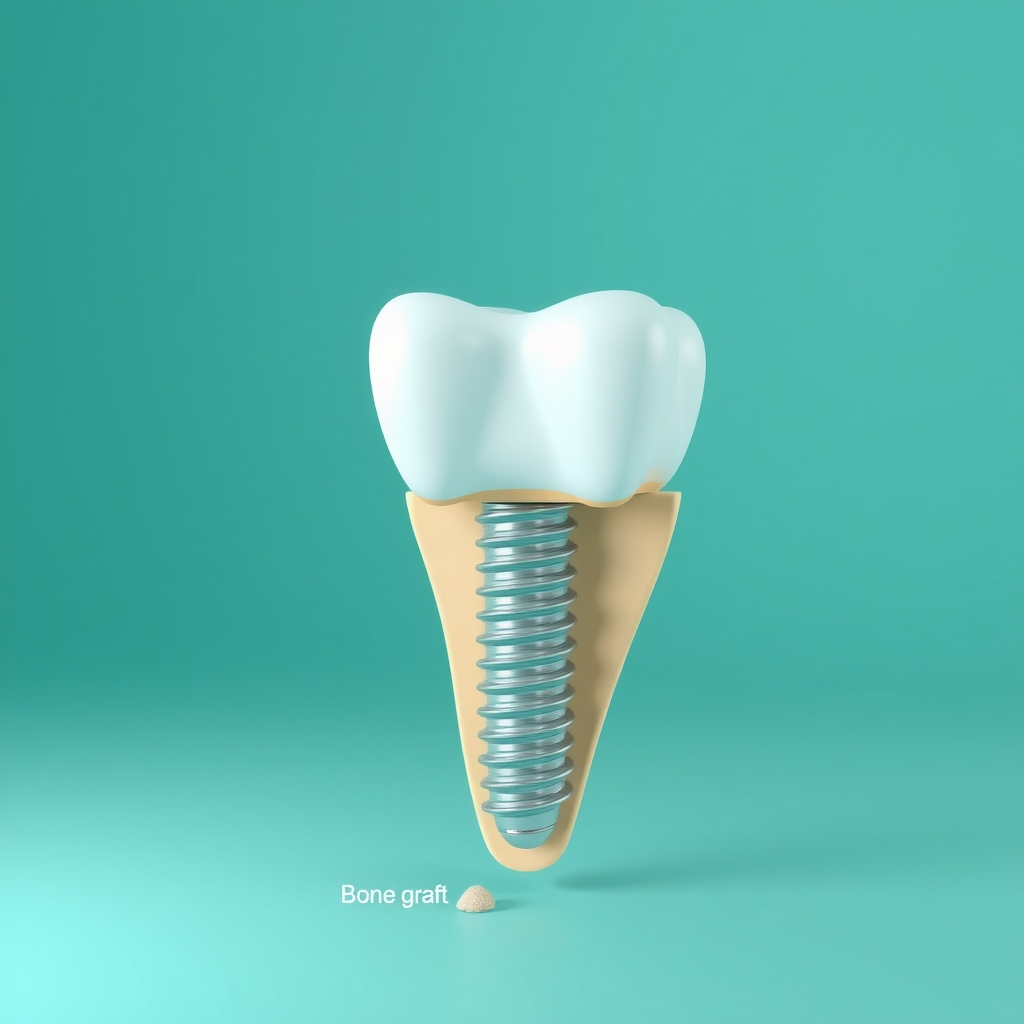
A dental implant works like an artificial tooth root. It needs a certain amount of healthy, dense jawbone around it to fuse properly and stay stable for chewing. When this bone is insufficient, grafting helps rebuild the area so the implant has a solid foundation.
Common reasons for reduced bone include:
- Tooth loss that happened months or years ago, since the jawbone naturally shrinks once a tooth is missing
- Gum disease that has worn away supporting bone over time
- An infection or abscess that damaged bone around the tooth root
- A previous extraction where the socket was not preserved
- Natural anatomy, such as a thin jaw ridge or a sinus that sits close to the upper back teeth
Your dentist usually identifies this through a clinical exam and a 3D scan (CBCT), which shows the bone height, width, and density far more clearly than a regular X-ray.
Types of Bone Grafting Procedures
Not all grafts are the same. The right approach depends on how much bone is missing and where.
Socket Preservation
Done right after a tooth extraction to stop the socket from collapsing, making future implant placement easier.
Ridge Augmentation
Used when the jawbone has become too thin or narrow, rebuilding its width so an implant can be placed securely.
Sinus Lift
Needed for upper back teeth, where the sinus cavity can sit close to the jaw. The sinus membrane is gently lifted and graft material placed beneath it to create enough bone height.
Block or Major Bone Grafting
Used for larger bone defects, often using a small block of bone rather than granular graft material.
What the Procedure Involves
The graft is placed under local anaesthesia, so you stay comfortable and aware throughout. Depending on the type and extent of grafting, the appointment can take anywhere from 30 minutes to about 90 minutes. The graft material is placed into the deficient area and often covered with a protective membrane, then the gum is closed with sutures. Many patients go home the same day with no need for hospital admission.
Recovery Timeline
Recovery happens in two stages: initial healing of the gum, and the longer process of the graft integrating with your own bone.
- Days 1 to 3: Mild swelling and soreness, manageable with prescribed medication and a soft diet
- Week 1 to 2: Gum tissue heals over, stitches dissolve or are removed
- 2 to 4 months: Minor grafts (such as socket preservation) usually mature enough for implant placement
- 4 to 9 months: Larger grafts, including sinus lifts and ridge augmentation, generally need this much time to form solid, implant-ready bone
Your dentist will take a follow-up scan before proceeding with the implant, to confirm the graft has matured properly rather than relying on guesswork.
Cost of Bone Grafting in Gurugram
Costs vary depending on the type of graft material used, the size of the area being treated, and whether a sinus lift or additional membrane is required. For patients in DLF Phase 2, Gurugram, the typical range is as follows:
| Procedure | Typical Range (INR) |
|---|---|
| Socket preservation | 8,000 to 18,000 per site |
| Ridge augmentation | 15,000 to 35,000 |
| Sinus lift | 20,000 to 45,000 |
| Block or major grafting | 25,000 to 55,000 |
These are general estimates only. Your final cost depends on your specific scan findings and treatment plan, and will be confirmed after an in-person consultation at Cliniva Dental Clinic.
Is It Worth the Extra Step?
It can feel frustrating to hear that implant treatment needs an extra stage, but grafting exists to protect your investment. An implant placed into insufficient bone has a higher chance of complications later on. Taking the time to build a solid foundation now gives your implant the best chance of lasting for many years with normal chewing function and a natural appearance.
Have questions about your teeth?
Cliniva Dental Clinic · DLF Phase 2, Sector 25, Gurugram
Frequently asked questions
Does bone grafting hurt?
Most patients feel mild to moderate soreness for a few days, similar to a tooth extraction. Local anaesthesia is used during the procedure, and the dentist will prescribe pain relief and antibiotics if needed for the days after.
Can I get an implant on the same day as a bone graft?
Sometimes. If the bone loss is minor, a small graft can be placed at the same time as the implant. For larger gaps, the graft needs to heal first, which usually adds several months to the overall timeline.
What happens if I skip the bone graft?
Without enough bone, an implant may not fuse securely, which raises the risk of early failure. Your dentist will only recommend grafting when it genuinely improves the chances of a stable, long-lasting implant.
Is the graft material safe?
Yes. Options include your own bone, processed donor bone, or synthetic graft material, all of which are commonly used and well-studied in dental surgery. Your dentist will explain which type suits your case.
Treatment costs mentioned on this page are indicative ranges for the DLF Phase 2, Gurugram region. Your exact cost depends on your case and will be confirmed after a clinical examination at the clinic.